




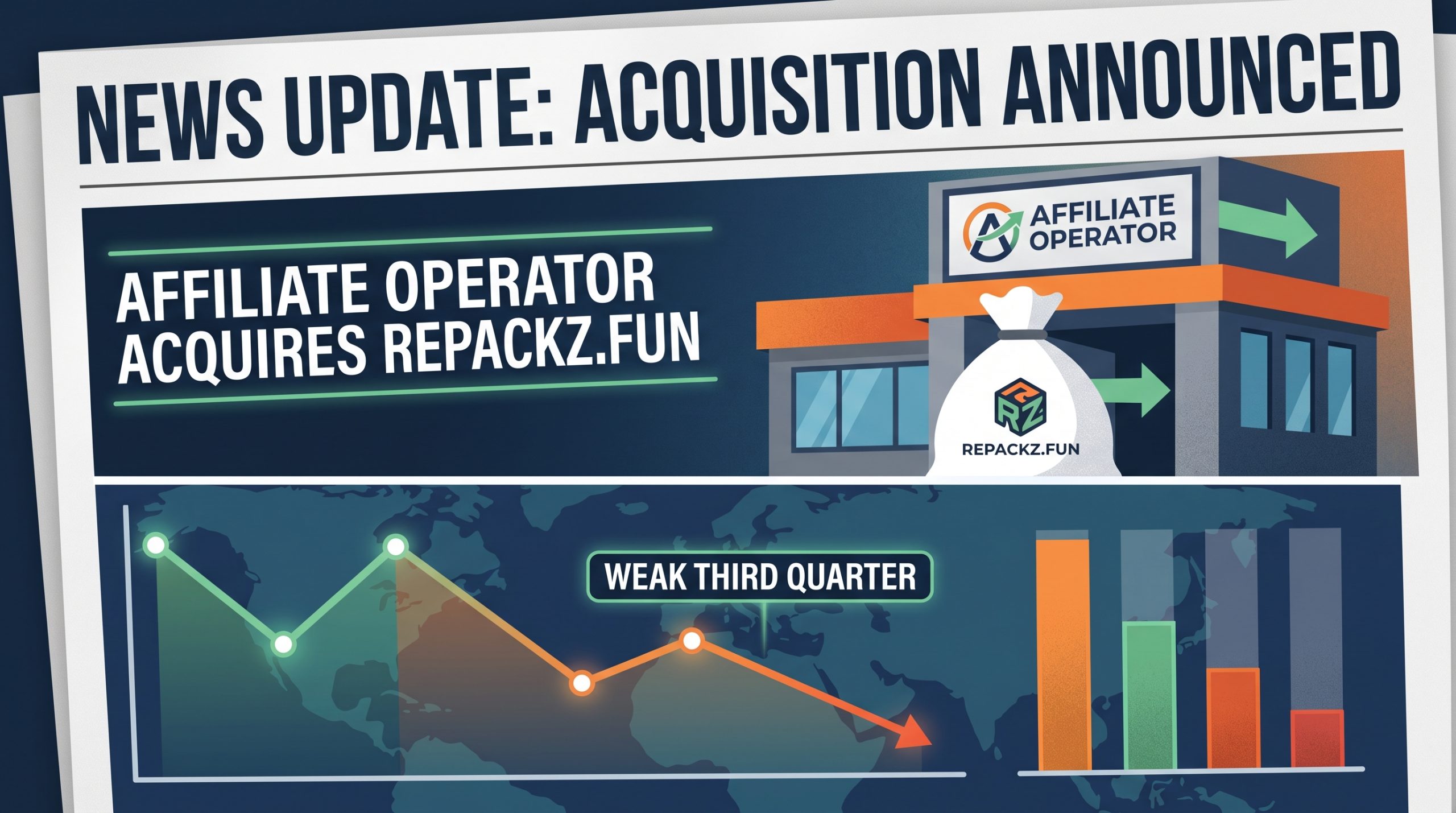
An affiliate marketing operator has acquired Repackz.fun, moving to broaden its portfolio in the same quarter it flagged softer-than-expected trading. The purchase, disclosed alongside the company’s own warning of a “weak” Q3, points to a familiar strategy among affiliates under revenue pressure: grow through acquisition rather than wait for organic traffic to recover. The financial terms have not been confirmed.
For an industry built on referral volume and conversion economics, the timing tells its own story. Weak quarters tend to push affiliates toward consolidation, and this deal fits that pattern neatly.
What the Repackz.fun Deal Signals for Affiliate Portfolios
Before the specifics, the strategic logic is worth laying out. The acquisition lands at a moment when the buyer is openly managing a shortfall, which shapes how the market should read it.
- Acquisition over organic recovery: Buying an established property shortcuts the slow grind of rebuilding traffic, particularly when a quarter has already disappointed.
- A weak Q3 does not automatically mean a weak balance sheet. The willingness to transact suggests capital was still available, or that the asset was priced to move.
- Portfolio diversification: Folding in the newly acquired Repackz.fun platform spreads exposure across more than one traffic source, reducing single-channel risk.
- Consolidation pressure: Smaller affiliate properties are increasingly absorbed by operators chasing scale, a trend that compresses the long tail of independent sites.
A Weak Quarter, and a Purchase in the Same Breath
The company characterised its third quarter as weak, a candid word that most operators soften in investor-facing language. (Plainspoken guidance is rarer than it should be in this sector.) What makes the disclosure notable is its pairing with an acquisition announcement rather than a cost-cutting one.
Affiliates earn through performance-based arrangements, where revenue follows clicks, sign-ups, and the share of player or customer value they help generate. When those metrics dip, the operator has two broad levers: cut spend, or buy traffic. This deal reaches for the second.
And while buying during a downturn carries obvious risk, it can also capture assets at more forgiving valuations. Sellers facing the same soft conditions are often more willing to negotiate. The question that lingers is whether Repackz.fun was acquired for its current performance or for what the buyer believes it can become under new ownership.
How the Deal Fits Current Market Conditions
Affiliate marketing operates on thin, volatile margins, and quarterly swings are routine. Traffic fluctuates with search algorithm changes, regulatory shifts in target markets, and seasonal patterns that can turn a strong summer into a flat autumn. A single weak quarter rarely defines a business. But a pattern of them does.
The table below frames the strategic trade-offs at play.
| Factor | Buy an existing property | Build organically |
|---|---|---|
| Speed to traffic | Immediate | Slow, often 12+ months |
| Upfront cost | High, concentrated | Lower, spread over time but demands sustained content and SEO investment with uncertain payoff |
| Risk profile | Inherited performance, known metrics | Unproven, dependent on execution |
| Integration effort | Significant | Minimal |
Seen through that lens, the choice to acquire during a down quarter is less contradictory than it first appears.
Why Timing Matters More Than the Price Tag
Deals struck in soft markets reward buyers who can hold their nerve. The precedent across affiliate consolidation shows operators who acquire counter-cyclically often emerge with stronger positions once conditions improve. Still, integration is where many of these transactions underdeliver.
Merging an acquired property means aligning tracking infrastructure, consolidating content operations, and retaining the audience that made the asset worth buying in the first place. Lose the traffic, lose the thesis. In practice, the first two or three quarters after a deal reveal whether the logic held.
Revenue retention is the metric to watch. If Repackz.fun’s traffic and conversions hold steady under the new owner, the acquisition validates itself. If they erode, the weak Q3 may look like the first of several.
The Regulatory and Compliance Backdrop
Affiliate operators increasingly work within tightening oversight, particularly in regulated verticals where referral practices draw scrutiny from authorities. Compliance obligations travel with an acquired asset. A buyer inherits not only the traffic but any outstanding regulatory exposure attached to how that traffic was generated.
That makes due diligence the quiet decider in these deals. Operators acquiring unlicensed or non-compliant properties can import liabilities that outlast any short-term revenue gain. Whether this transaction accounted for that remains between the parties.
Frequently Asked Questions
What does the Repackz.fun acquisition involve?
An affiliate operator has acquired the Repackz.fun property. The move expands the buyer’s portfolio and was disclosed in the same period the company reported a weak third quarter. Financial terms have not been made public.
Why acquire during a weak quarter?
Soft markets can produce more attractive asset valuations, and buying established traffic is faster than building it. For an operator under revenue pressure, an acquisition offers an immediate route to new volume rather than a months-long rebuild.
What is the main risk in this type of deal?
Traffic and audience retention. An affiliate asset is only as valuable as the users it keeps, so any post-acquisition decline in visitors or conversions directly undercuts the rationale for the purchase.
How will the deal’s success be measured?
By revenue and traffic retention over the quarters that follow. Stable performance would confirm the strategy; a continued decline would raise questions about both the asset and the buyer’s broader position.
What to Watch Next
The next earnings disclosure will carry more weight than this one. If the acquisition arrests the slide and lifts combined traffic, the counter-cyclical bet pays off. If the weak quarter extends into the next, the deal becomes a line item in a harder conversation about where the operator’s growth actually comes from.
For now, the signal is clear enough: this operator would rather buy its way back to scale than wait for it.