




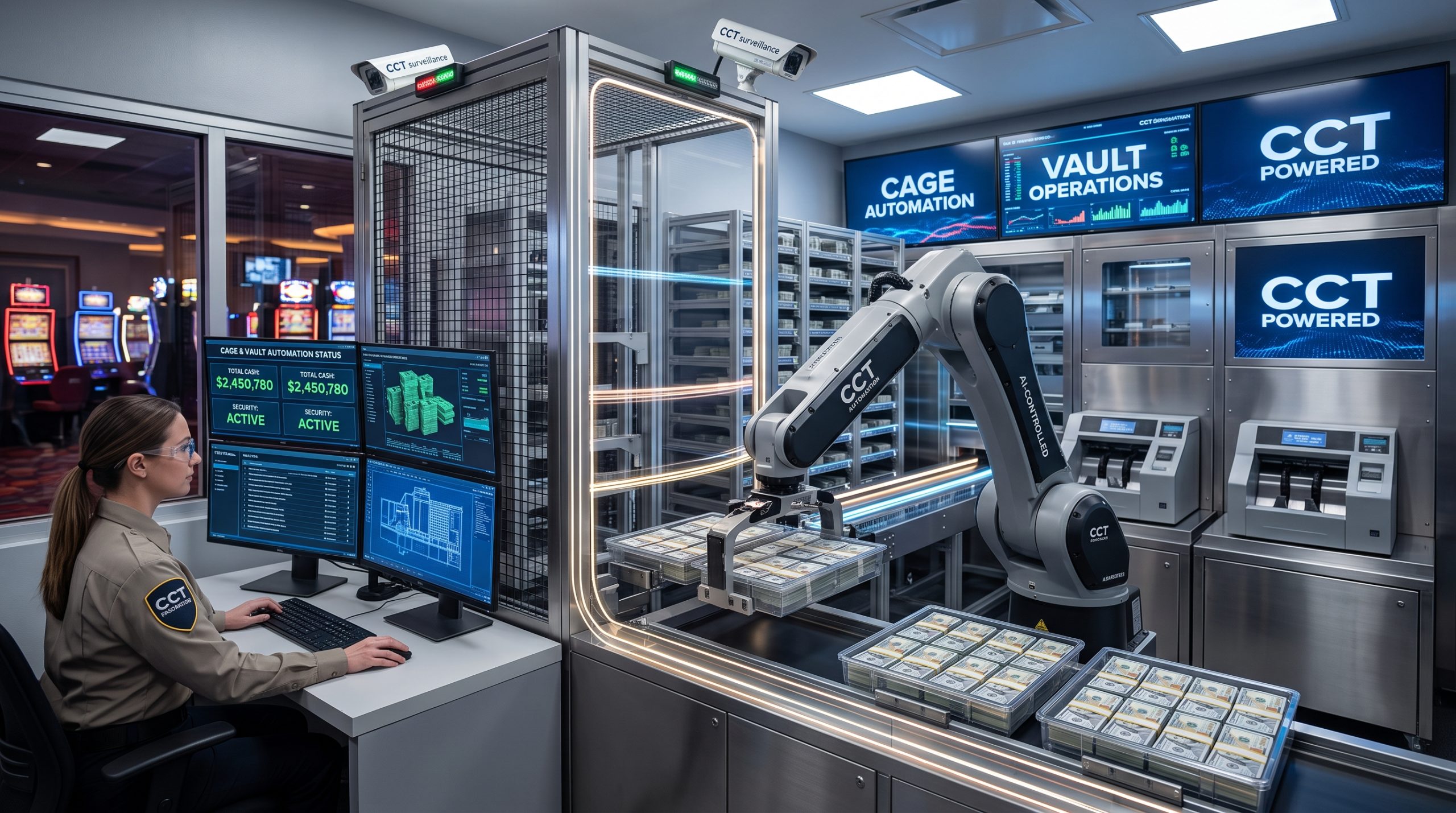
Kurt Williams, CEO and Co-Founder of CCT, told CDC Gaming that the company is replacing manual cash-handling routines across casino cages, vaults and revenue accounting with automated systems designed to cut staff workloads. The conversation centred on how properties can move beyond spreadsheets and paper-based reconciliation toward software that tracks currency movement in real time. For operators managing millions in daily cash flow, the pitch is operational: fewer hours spent counting, balancing and chasing discrepancies.
And the timing is deliberate. Labour shortages across the gaming floor have forced finance departments to do more with smaller teams.
What Cage Automation Means for Operator Margins
The interview framed a shift that back-office managers have been circling for years. Below is a distilled view of where the business impact actually lands.
- Labour reallocation: Automating reconciliation and replenishment frees cage and vault staff from repetitive counting, redirecting hours toward oversight and customer-facing roles.
- Error reduction: Replacing manual spreadsheets with system-tracked currency movement narrows the gap where counting mistakes and variances hide.
- Smarter cash replenishment keeps the right denominations where they are needed, instead of over-stocking a cage that never runs dry.
- Audit readiness: Automated revenue accounting produces a cleaner trail for internal controls and regulatory review, a point that matters in jurisdictions with strict cash-reporting rules.
- Scalability: A software-led process can stretch across multiple properties without multiplying headcount at the same rate.
Beyond Spreadsheets: The Operational Problem CCT Targets
Casino cages run on cash, and lots of it. Every shift involves counting floats, balancing drawers, moving currency between the cage and the vault, and reconciling the whole operation against gaming revenue. Done manually, that work eats hours and invites human error. Williams described CCT’s approach as swapping paperwork for automated processes across all three functions: the cage, the vault, and revenue accounting.
The appeal is straightforward. When a float balances itself on screen rather than on a legal pad, the supervisor signing off spends less time verifying arithmetic and more time catching the things arithmetic misses.
What remains less clear is how quickly legacy properties can retire entrenched manual habits. Finance teams tend to trust the ledger they built. Convincing a veteran cage manager that the software counts better than they do is, in practice, as much a cultural task as a technical one (and not every property moves at the same pace).
Cash Replenishment: Getting the Right Notes to the Right Place
Replenishment was a central thread of the discussion. The logic rests on matching currency supply to demand across the floor so that a cage holds enough working cash without tying up excess reserves that could sit idle in the vault. Over-stocking locks up capital. Under-stocking stalls payouts and frustrates guests.
Williams positioned CCT’s tooling as the middle path: data-driven replenishment that reads usage patterns and signals when and where to move cash. The companies that get this right shave both risk and cost at once.
Where This Sits in the Wider Market
Automation of back-office gaming functions is not new, yet adoption has lagged the pace seen on the slot floor and in player-tracking systems. Operators invested heavily in guest-facing technology while the cage, arguably the most cash-intensive part of any casino, kept running on processes that would look familiar to a finance clerk from two decades ago.
That gap is now a competitive variable. A property that closes its books faster and reconciles with fewer variances carries a measurable advantage, especially across portfolios where small per-site savings compound. Vendors such as CCT’s casino cash management platform are competing to own that layer of the operation, pitching software as the connective tissue between the cage, the vault and the general ledger.
Regulatory pressure adds a second driver. Cash-reporting obligations and anti-money-laundering controls demand accurate, timely records. A system that logs every currency movement automatically is easier to defend in an examination than a drawer of handwritten slips. The result: compliance stops being a separate chore and becomes a by-product of how the cage already runs.
Manual Versus Automated Cage Operations
| Function | Manual Approach | Automated Approach |
|---|---|---|
| Reconciliation | Spreadsheets, paper logs, end-of-shift balancing by hand | Real-time system tracking with variance flags |
| Cash replenishment | Fixed schedules or supervisor judgement, often over-stocked | Demand-driven signals based on usage patterns across the floor |
| Revenue accounting | Separate entry, prone to transcription error and delayed close | Integrated audit trail linking cage activity to the ledger |
| Labour demand | High; repetitive counting consumes staff hours every shift | Lower; staff shift toward oversight and exception handling |
Why Finance Teams Should Watch This Now
The case for automation strengthens when margins tighten. Casinos facing wage inflation and thinner back-office teams need processes that do not break under reduced headcount. A cage that reconciles itself is not a luxury in that environment. It is a hedge.
There is a human dimension too. Staff pulled off manual counting can move into roles that machines handle poorly: judgement calls, guest interaction, exception investigation. Reframed that way, automation reads less as a cut and more as a redeployment. Whether every operator sells it to their teams that way is another matter.
Frequently Asked Questions
What does CCT automate inside a casino?
According to CEO Kurt Williams, CCT automates operations across the casino cage, the vault and revenue accounting, replacing manual spreadsheets and paperwork with system-driven processes.
How does automated cash replenishment reduce cost?
It matches currency supply to actual floor demand, so a cage holds enough working cash without locking up excess capital in idle reserves. That balance trims both the risk of running short and the cost of over-stocking.
Does automation reduce casino staffing?
Williams frames it as workload reduction rather than headcount elimination. Staff freed from repetitive counting can be redirected toward oversight and customer-facing roles.
Why does this matter for compliance?
Automated logging of every currency movement produces a cleaner audit trail, which supports cash-reporting and anti-money-laundering obligations.
Is cage automation widely adopted?
Not yet. Back-office gaming functions have trailed the investment poured into player-facing technology, leaving room for vendors competing on this layer.