





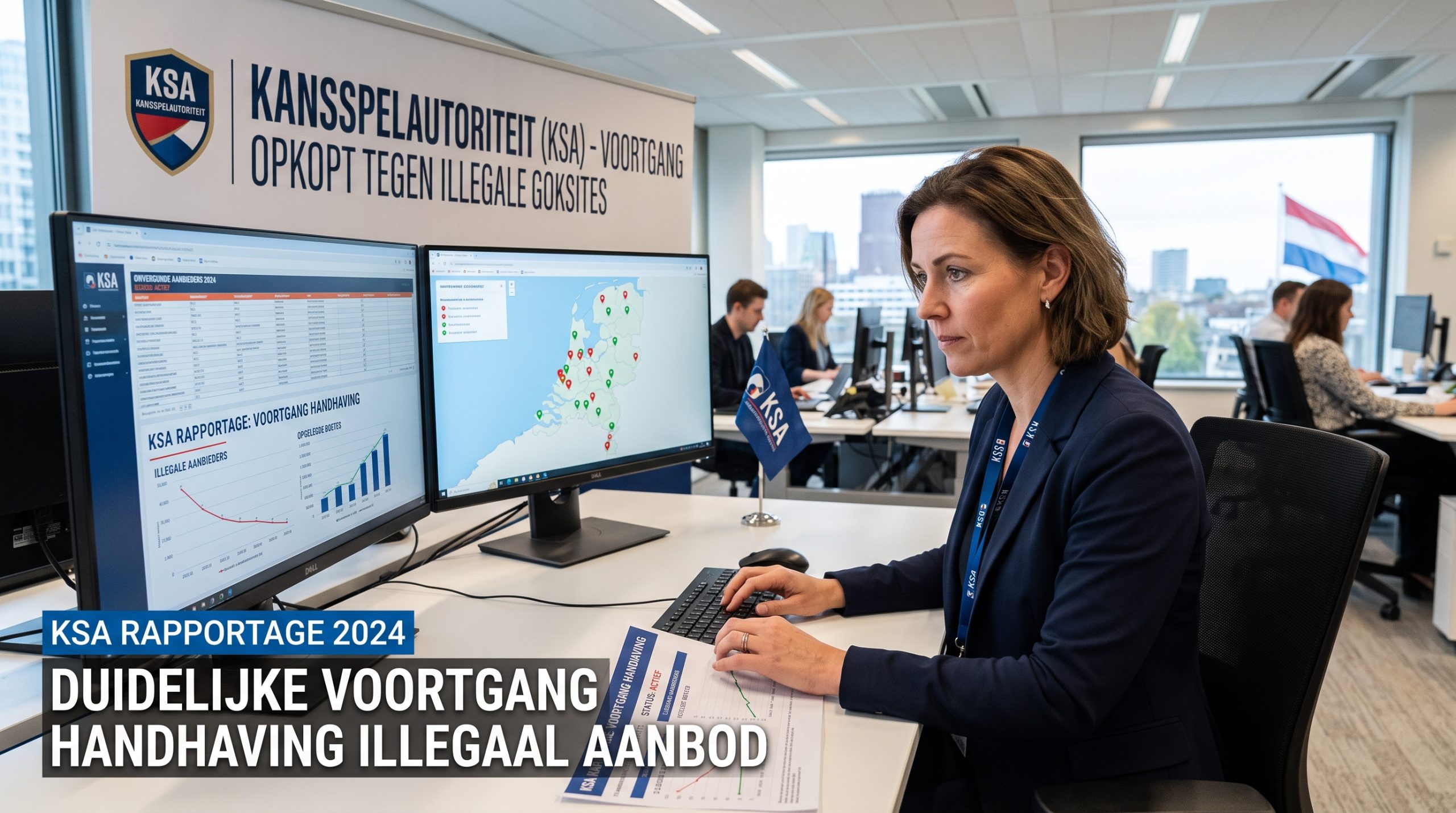
The Netherlands Gambling Authority (Kansspelautoriteit, the Dutch licensing and enforcement body) has issued a fresh update on its campaign against operators serving Dutch players without authorisation. The regulator, known as the KSA, confirmed it continues to pursue enforcement measures against sites targeting consumers outside the licensed framework established under the Remote Gambling Act. The update arrives as pressure builds across European markets to contain offshore operators who route around national licensing regimes.
For executives watching the Dutch market, the signal is straightforward. The regulated channel is being defended, and the perimeter is where the action sits.
What the KSA Update Means for Operators
The enforcement push matters because the Netherlands built its legal online market on a simple bargain: operators accept tax, player-protection obligations, and advertising limits in exchange for market access. Unlicensed sites honour none of that, and every euro they capture is a euro pulled out of the taxed, monitored channel. That dynamic is what the KSA is trying to reverse.
- Channelisation is the real metric. The regulator’s success is measured less by fines than by how much play it keeps inside the licensed system rather than letting it drift offshore.
- Payment and advertising routes are under scrutiny. Enforcement increasingly targets the infrastructure that unlicensed operators rely on, not just the operators themselves.
- Licensed operators gain a cleaner competitive field when offshore rivals are squeezed.
- Reputational exposure rises for suppliers. Firms providing software, payments, or affiliate traffic to unlicensed sites face heightened risk of being caught in the regulator’s net.
A Market Still Settling After 2021
The Dutch online gambling market opened in October 2021, when the Remote Gambling Act (Wet Kansspelen op afstand, or Koa) took effect. The framework legalised online casino and sports betting through a licensed channel for the first time, and the KSA was handed the job of policing it. Since then, the regulator has leaned hard on advertising restrictions, deposit-limit rules, and a duty of care obligation that requires operators to intervene when players show signs of harm.
But a licensed market only works if the unlicensed alternative is made inconvenient. And that is the harder half of the mandate. Operators without a Dutch licence that accept Dutch players, display content in Dutch, or offer domains ending in .nl fall squarely within the KSA’s enforcement priorities (criteria the regulator has applied consistently since the market opened).
What remains less clear is how fast offshore operators adapt their tactics once one route closes.
Why Enforcement Timing Matters Now
The update lands during a period of tightening across the sector. The KSA has already introduced mandatory deposit limits and restricted untargeted advertising, including a near-total ban on certain forms of gambling promotion. Each tightening of the licensed regime arguably creates incentive for some players to seek looser offshore alternatives, which is precisely why enforcement against unlicensed sites has to move in step.
That shift matters because the regulator cannot credibly impose strict rules on licensed firms while unlicensed competitors operate unchecked. The two efforts are linked. Tighten one side without defending the other, and channelisation erodes.
Enforcement Levers at the Regulator’s Disposal
| Lever | Function | Target |
|---|---|---|
| Financial penalties | Direct sanction for unlicensed operation | Operators serving Dutch players without a licence |
| Cease-and-desist orders | Formal demand to halt activity, often with recurring penalty payments attached if ignored | Sites and their operators |
| Payment disruption | Pressure on processors handling unlicensed transactions | Financial intermediaries |
| Public warnings | Alerting consumers and partners to unauthorised brands | Players and suppliers |
The Business Stakes Behind the Headlines
Strip away the regulatory language and the commercial logic is plain. Licensed Dutch operators pay gambling tax and bear compliance costs that offshore rivals avoid entirely. When unlicensed sites compete on that uneven footing, the licensed channel loses both revenue and the policy argument for the whole framework. Enforcement is, in effect, the state protecting its own tax base and its player-protection project at the same time.
For international groups, the message carries weight beyond the Netherlands. A regulator willing to pursue the payment and advertising infrastructure sets a precedent that other European authorities have already signalled interest in borrowing. Compliance teams would be unwise to treat this as a purely Dutch story.
And for affiliates and B2B suppliers, the calculation is sharper still: continuing to serve an unlicensed operator in the Dutch market is a bet against the regulator’s reach. That bet is getting worse by the quarter.
Frequently Asked Questions
What counts as an unlicensed operator in the Netherlands?
Any gambling operator that offers online services to Dutch residents without holding a licence from the KSA. Indicators the regulator uses include Dutch-language content, acceptance of Dutch players, and use of .nl domains.
Does the KSA only fine operators?
No. Financial penalties are one tool among several. The regulator also issues cease-and-desist orders, pressures payment providers, and publishes warnings aimed at consumers and commercial partners.
When did the Dutch online market become legal?
October 2021, under the Remote Gambling Act. That law created the licensed online channel and gave the KSA its enforcement authority.
Why does enforcement against unlicensed sites matter to licensed operators?
Because unlicensed rivals avoid tax and compliance costs, undercutting the firms that play by the rules. Effective enforcement keeps the competitive field level and defends the credibility of the entire regulated system.
Could suppliers be held responsible?
Yes. Payment processors, affiliates, and technology providers linked to unlicensed operators face growing exposure as the KSA extends enforcement to the infrastructure surrounding offshore sites.


