

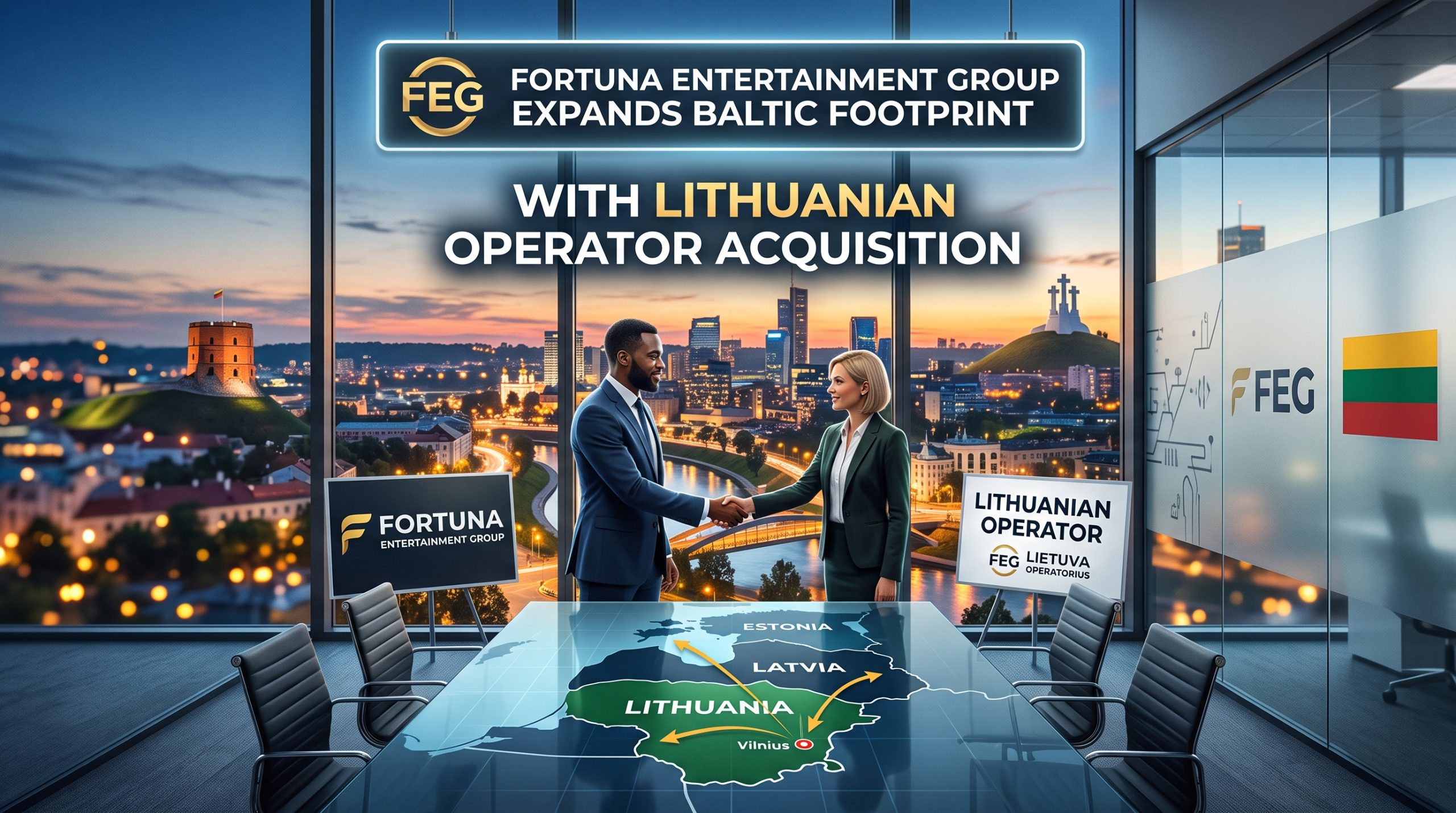
Fortuna Entertainment Group (FEG), one of Central and Eastern Europe’s largest regulated betting and gaming operators, has agreed to acquire a Lithuanian gambling operator, extending the group’s licensed network into a new Baltic market. The deal brings another regional brand under FEG’s umbrella and marks a further step in the company’s steady eastward consolidation. Terms of the transaction have not been publicly disclosed.
For a group already active across several jurisdictions, Lithuania is a logical rather than dramatic addition. But the timing says something about where the operator sees its next phase of growth.
What the Lithuania Deal Means for FEG’s Regional Strategy
The acquisition slots into a pattern FEG has followed for years: buy into regulated markets, absorb an established local licence, and scale a familiar product set across borders. Below are the strategic reads that matter most for operators, investors, and regulators watching the Baltic gaming space.
- Licensed market entry: FEG gains an operator already authorised under Lithuania’s regulatory regime, sidestepping the slow grind of applying for a licence from scratch.
- Baltic expansion: The move plants FEG in a market it had not previously operated in directly, widening its CEE geographic base.
- Consolidation continues across the region, and FEG is positioning itself as a buyer rather than a target.
- Brand portfolio growth: Adding a local operator gives FEG an established customer base and recognised name rather than a cold start.
- Cross-market product leverage: Existing sportsbook and online casino technology can, at least on paper, be extended into the new market with limited incremental cost.
A Familiar Playbook in a New Market
FEG has built its scale through acquisition, not organic drift. The group operates across markets including the Czech Republic, Slovakia, Poland, Romania, and Croatia, running both retail and online channels under regulated conditions. Lithuania fits that logic neatly. The country regulates online and land-based gambling through a national licensing framework, and acquiring an authorised operator is the cleaner route in.
That preference for buying licensed operators reflects a broader industry reality. In practice, regulatory approval timelines and compliance obligations make greenfield entry expensive and slow. Buying a company that already holds a licence and a player base compresses that timeline considerably. It also transfers an existing compliance history, which cuts both ways: the buyer inherits the good and the unresolved.
What remains less clear is how aggressively FEG intends to rebrand or integrate the acquired operator. Groups in this position sometimes retain local branding for years, wary of alienating an established customer base.
Why Baltic Consolidation Is Accelerating
The Baltic gambling markets have drawn increasing interest from larger operators. Lithuania, Latvia, and Estonia each maintain their own licensing systems, and each has tightened advertising and responsible-gambling rules over recent years. That regulatory maturity is precisely what attracts consolidators. A market with clear rules is easier to price than one where the framework keeps shifting.
For FEG, the appeal is straightforward. More regulated markets mean more diversified revenue, and diversification insulates a group from any single jurisdiction’s tax or policy shock. When one market raises gaming duties or restricts marketing, a broader footprint absorbs the hit. Details of the transaction, including the acquired operator’s revenue and market share, have not been released by the company.
| Element | Detail |
|---|---|
| Acquirer | Fortuna Entertainment Group (FEG) |
| Target | Lithuanian gambling operator (name subject to confirmation) |
| Market entered | Lithuania, a nationally licensed jurisdiction with tightened advertising and responsible-gambling requirements in recent years |
| Deal value | Not disclosed |
| Strategic rationale | Regulated Baltic market entry via established licensed operator |
Regulatory and Competitive Implications
Every acquisition in a licensed market carries a regulatory dimension. Lithuania’s gaming authority oversees operator conduct, advertising limits, and player protection obligations, and a change of ownership typically triggers regulatory review of the new controlling party. FEG’s track record across multiple regulated jurisdictions arguably works in its favour here, though approval is never automatic.
Competitively, the deal raises the stakes for smaller Baltic operators. Facing a well-capitalised group with cross-border technology and marketing muscle is a different proposition than facing local rivals. Consolidation tends to compress margins for those who stay independent, and it narrows the pool of acquisition targets for the next buyer that comes looking. Operators seeking more detail on the group’s regulated portfolio can review the Fortuna Entertainment Group corporate operations across Central and Eastern Europe and its existing market presence.
The precedent is not new. It is the direction of travel.
Frequently Asked Questions
What is Fortuna Entertainment Group?
FEG is a Central and Eastern European betting and gaming operator running licensed retail and online sportsbook and casino operations across several markets, including the Czech Republic, Slovakia, Poland, Romania, and Croatia.
Why is FEG acquiring a Lithuanian operator?
The acquisition gives FEG immediate entry into Lithuania’s regulated gambling market through an already-licensed operator, avoiding the lengthy process of applying for a new licence and building a customer base from zero.
How much is the deal worth?
No financial terms have been disclosed by the company.
Does the acquisition need regulatory approval?
A change of ownership in a licensed gambling operator generally requires review by the national gaming authority, which assesses the suitability of the new controlling party. FEG’s experience across multiple regulated jurisdictions is likely to factor into that assessment, though approval cannot be assumed.
What does this mean for other Baltic operators?
It intensifies competitive and consolidation pressure. Smaller independent operators now face a larger, better-resourced rival, and the pool of remaining acquisition targets shrinks with each deal.