





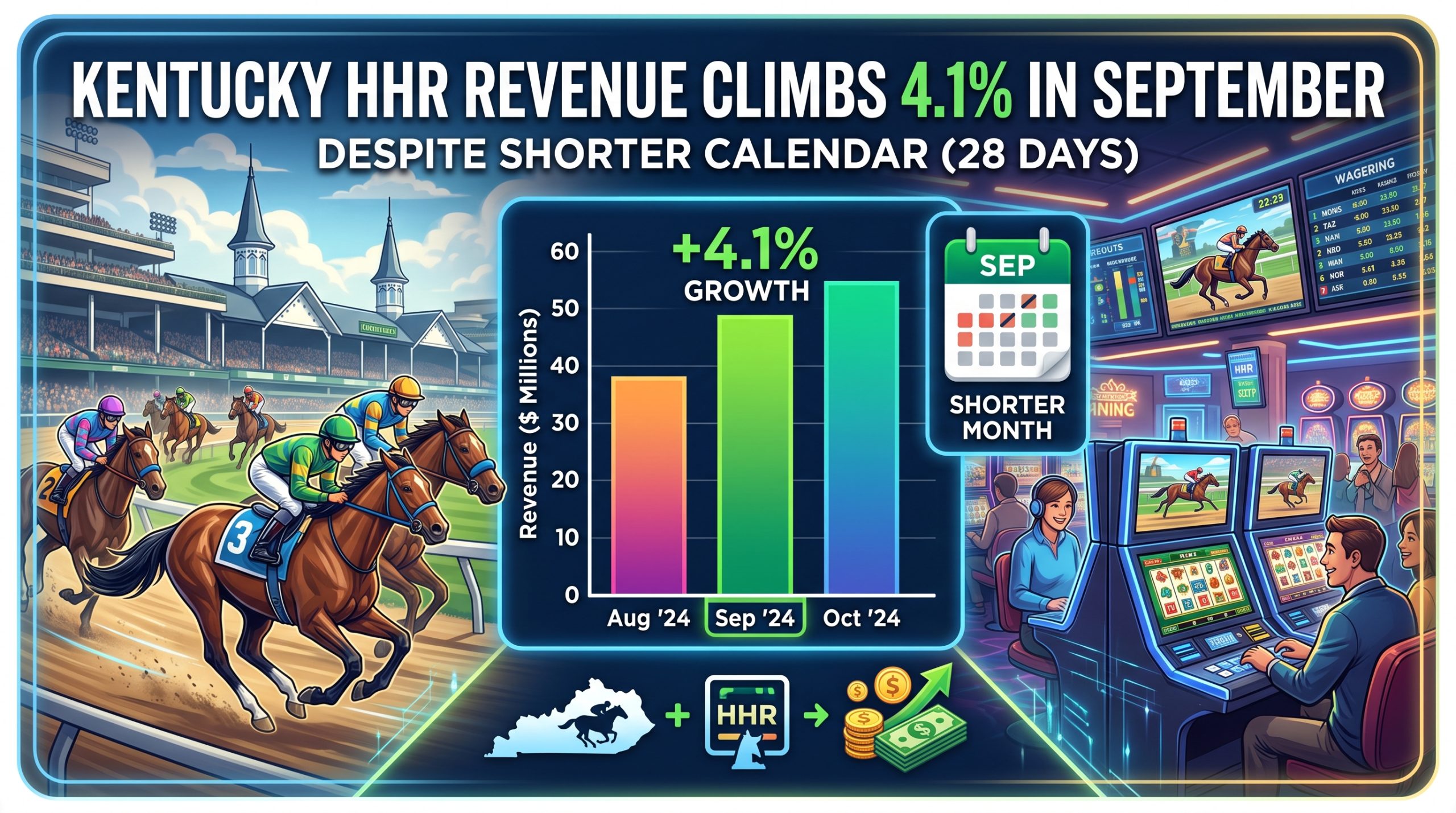
Historical horse racing (HHR) machines in Kentucky generated $95 million in gross revenue in September, a 4.1% increase over the same month last year. The gain came even though the month held one fewer weekend day than August 2025 and lacked the Labor Day holiday that typically lifts gaming traffic. On a same-store basis, excluding the recently opened Marshall Yards casino, revenue still rose 2.6%. The figures point to steady consumer demand for a gaming format that remains unique to the state’s regulatory framework.
What the September Numbers Signal for Kentucky Gaming
Before the detail, the short version: Kentucky’s HHR sector is growing, and it is doing so without the calendar doing it any favours.
- Total HHR gross reached $95 million in September, up 4.1% year on year.
- Same-store revenue climbed 2.6% once Marshall Yards is stripped out, a cleaner read on underlying demand.
- The growth arrived despite one fewer weekend day and no Labor Day weekend, both of which normally pad monthly totals.
- Marshall Yards, the newest venue, is already contributing enough to widen the gap between headline and same-store figures.
- For operators, the trend reinforces HHR as a durable earnings base rather than a seasonal spike.
How Historical Horse Racing Works in the State
HHR machines let players wager on the outcomes of previously run races, with identifying details stripped out so no one can recognise the event. They look and feel like slot machines. But legally they are pari-mutuel wagering, which is why they exist in Kentucky at all, a distinction the state’s courts have litigated more than once.
That legal footing matters. Kentucky does not permit conventional commercial casinos, so HHR has become the vehicle through which racetracks and their affiliates offer machine-based gaming. The format channels revenue back into purses, breeding incentives, and the broader equine economy that underpins the state’s identity. Operators such as the racing and gaming company behind Churchill Downs have built significant HHR operations on this model, treating the machines as a year-round complement to live racing dates.
Marshall Yards and the New-Supply Effect
The spread between the 4.1% headline figure and the 2.6% same-store number tells its own story. Marshall Yards, still early in its life cycle, accounts for the difference. New venues tend to pull in curiosity traffic and capture spend that older sites might otherwise have held, so isolating same-store performance gives a fairer picture of whether existing demand is actually expanding.
And it is. A 2.6% same-store gain in a month with fewer peak days is arguably the more impressive of the two numbers.
Headline vs. Same-Store Growth
| Metric | September Figure | What It Captures |
|---|---|---|
| Total gross revenue | $95 million | All HHR venues, including Marshall Yards |
| Year-on-year growth | 4.1% | Combined effect of existing demand plus new supply from the recently opened Marshall Yards property |
| Same-store growth | 2.6% | Underlying demand at established venues only |
| Calendar headwind | One fewer weekend day, no Labor Day | Factors that normally lift monthly totals |
Why the Calendar Context Changes the Read
Weekend days are where machine gaming earns most of its money. Strip one out, remove a holiday weekend, and most operators would expect a flat or softening month. Kentucky posted the opposite.
That shift matters because it suggests demand is not simply following the calendar. When revenue rises against a weaker day count, the growth is coming from somewhere else: higher per-visit spend, broader player participation, or the pull of newer product on the floor. Which raises a harder question for forecasters trying to model the rest of the fiscal year, when the comparables tilt the other way.
Business and Regulatory Implications
For Kentucky’s tracks, the September figures strengthen the case that HHR is a reliable revenue engine rather than a volatile one. Steady gross feeds directly into racing purses, which in turn support field sizes and the competitive quality that keeps the state’s signature events commercially relevant.
There is a policy dimension too. HHR’s legal standing as pari-mutuel wagering has been contested, and the Kentucky legislature has previously acted to codify its status. Consistent, visible revenue growth gives the format political weight. Money talks in statehouses, and a $95 million monthly gross is a loud number.
Still, the dependence on a single legal interpretation leaves the sector exposed in a way conventional casino markets are not. Operators are building long-term capital plans, including new venues like Marshall Yards, on a framework that rests on how the courts and lawmakers continue to define the machines. At least on paper, that framework is settled. In practice, settled things have a way of being reopened.
What Comes Next
The near-term watch items are straightforward. Marshall Yards will keep widening the gap between headline and same-store numbers until it reaches maturity, after which both figures should converge. Analysts will look to the autumn and winter months, when year-on-year comparisons become tougher, to judge whether September’s resilience was a one-off or the start of a firmer trend.
For now, the sector heads into the back half of the year with momentum and a number that regulators and operators alike can point to.
Frequently Asked Questions
What are historical horse racing machines?
They are gaming terminals that let players bet on the results of races that have already been run, with all identifying details removed. Legally they fall under pari-mutuel wagering rather than slot machine gaming, which is the basis for their operation in Kentucky.
Why does Kentucky rely on HHR instead of traditional casinos?
The state does not authorise conventional commercial casinos. HHR has become the primary route for racetracks to offer machine-based gaming, with revenue tied back into racing purses and the equine industry.
What is the difference between total and same-store revenue?
Total revenue includes every venue, among them the newly opened Marshall Yards. Same-store revenue counts only established sites, giving a cleaner measure of whether existing demand is growing. In September those figures were 4.1% and 2.6% respectively.
Why is the September growth notable given the calendar?
Because it happened with one fewer weekend day and no Labor Day weekend, both of which usually boost gaming revenue. Growing against that headwind points to stronger underlying demand.


