



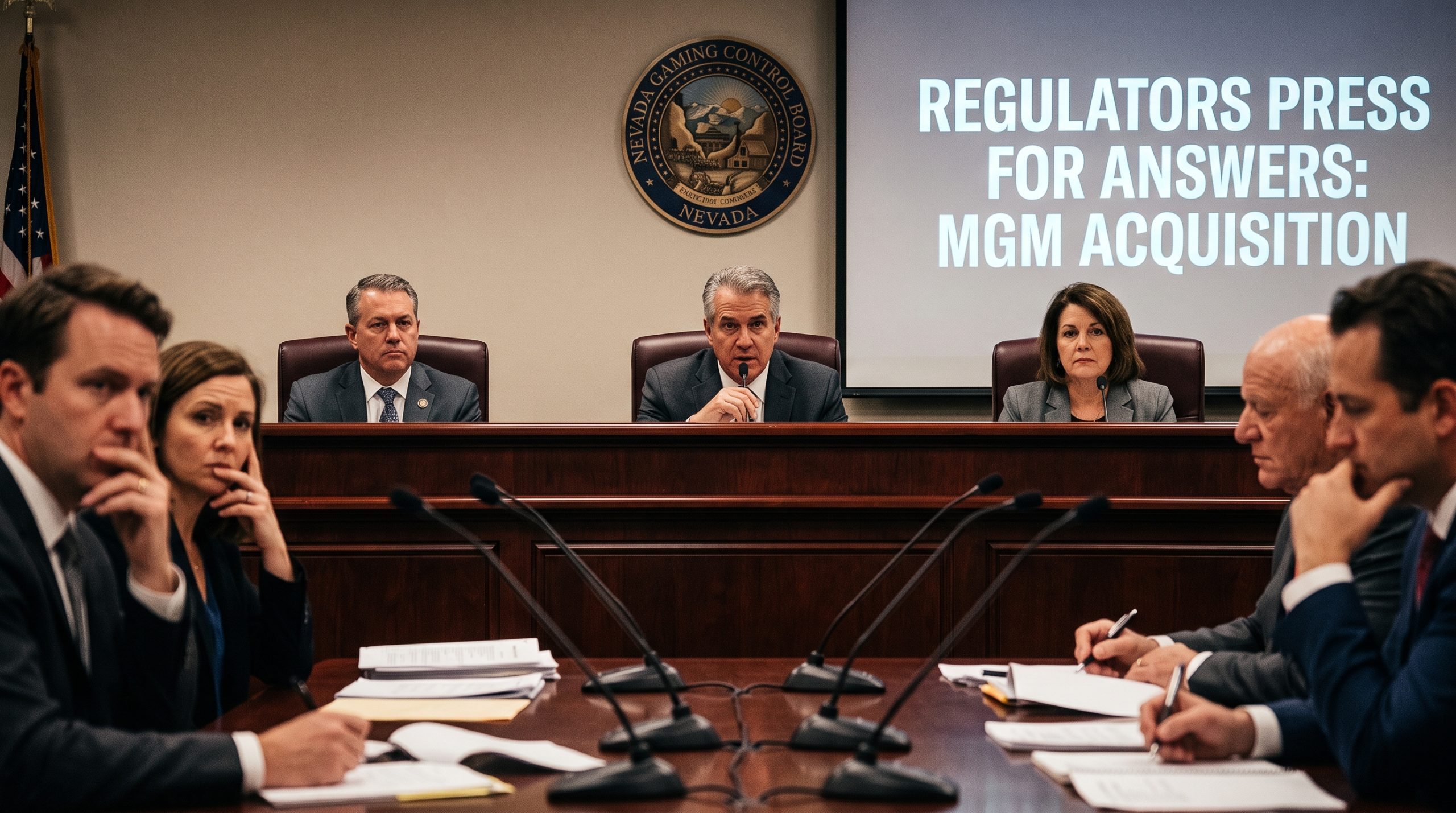
The Nevada Gaming Commission on Thursday questioned executives tied to media mogul Barry Diller’s proposal to acquire MGM Resorts International, voicing concern over the fate of the state’s largest private-sector employer. Commissioners pressed Chandler Pohl, a vice president connected to the deal, on how a change in ownership might affect operations, jobs, and the company’s footprint across Las Vegas. The exchange followed similar scrutiny before the Nevada Gaming Control Board, the state’s investigative arm. What emerged was less a rubber stamp than a demand for specifics.
Why the MGM Deal Puts Nevada Regulators on Edge
Before any list of implications, one number frames the stakes: MGM Resorts is Nevada’s single largest private employer, with tens of thousands of workers spread across its Strip properties. Regulators are not evaluating an abstract corporate transaction. They are weighing the future of a payroll that touches an enormous share of the local economy.
- Employment exposure: As the state’s biggest private-sector employer, MGM’s ownership structure carries direct consequences for household income across the Las Vegas Valley.
- Regulatory gatekeeping: No acquisition of this scale proceeds without approval from both the Gaming Control Board and the Gaming Commission, giving Nevada real leverage over terms.
- Commissioners want to know who actually runs the company day to day if the deal closes.
- Strategic uncertainty: A media-led ownership group taking over a casino operator raises questions about operational priorities that go beyond gaming.
- Precedent value: How Nevada handles this review signals to future acquirers how much operational detail the state expects up front.
What Commissioners Actually Asked
The tone in the room was cautious. Pohl, appearing on behalf of the acquiring interests, faced the same line of questioning he had already navigated before the Control Board. Commissioners did not hide their unease (a rare thing in proceedings that often move by consensus). Their focus kept returning to one theme: continuity.
Would management stay? Would the workforce hold? And while executives can offer assurances, regulators know that promises made during a licensing hearing carry weight only if they survive the transaction itself. That gap between what is pledged and what is delivered is precisely where the commission’s anxiety lives.
Diller, best known for building media and internet businesses rather than running casino floors, sits at the center of the proposal. His involvement is what makes the review unusual. Gaming operators typically change hands within the industry. A crossover from media into resort ownership invites a different set of questions about intent and expertise.
The Business Stakes Behind the Scrutiny
MGM Resorts operates some of the most recognizable properties on the Las Vegas Strip, and its performance ripples through hospitality, entertainment, and convention traffic statewide. Any shift in control affects vendors, unions, and municipal tax receipts. The company’s scale is the reason regulators cannot treat this as routine.
Consider what a large casino operator represents to Nevada’s fiscal base: gaming taxes, room taxes, and employment that anchors entire neighborhoods. When ownership of an operator of this size is in play, the state’s interest is not sentimental. It is structural.
For context on the company’s existing scale and portfolio, MGM’s own corporate disclosures through the resort group’s investor and property network outline a footprint that few private employers in the state can match. That footprint is exactly what commissioners are trying to protect through their questioning.
A Regulator’s Leverage, and Its Limits
Nevada’s dual-body approval process gives regulators a genuine chokepoint. The Gaming Control Board investigates and recommends. The Gaming Commission decides. An applicant must satisfy both, which means uncomfortable questions asked early rarely disappear later.
Still, leverage has boundaries. Regulators can condition approval, demand commitments, and delay a vote. What they cannot easily do is micromanage a private company’s long-term strategy once the deal clears. That tension explains the pointed tone Thursday.
| Stakeholder | Primary Concern |
|---|---|
| Nevada Gaming Commission | Employment stability and operational continuity at the state’s largest private employer |
| Gaming Control Board | Suitability of the acquiring parties and completeness of disclosures during the investigative phase |
| MGM workforce | Job security and whether existing management remains in place after any ownership change |
| Acquiring interests | Securing regulatory approval while addressing questions about a media-to-gaming crossover |
What Happens Next
The proposal remains under review. Pohl’s appearances before both bodies suggest the process is advancing, but advancing is not the same as approved. Commissioners signaled they want fuller answers before they are comfortable moving forward.
The precedent matters beyond this single deal. If Nevada extracts firm commitments on employment and management continuity, future acquirers will arrive expecting the same. That template already exists in how the state structures its two-step review.
One question lingered over Thursday’s session without a clean resolution: what does it mean when the person acquiring a casino giant made his name outside gaming entirely?
Frequently Asked Questions
Who is behind the proposed MGM Resorts acquisition?
Media mogul Barry Diller leads the company that has proposed acquiring MGM Resorts International. His background is primarily in media and internet businesses rather than casino operations, which is part of why the deal has drawn additional regulatory attention.
Why is the Nevada Gaming Commission involved?
Any acquisition of a licensed gaming operator in Nevada requires approval from both the Gaming Control Board and the Gaming Commission. Because MGM Resorts is the state’s largest private-sector employer, the review carries unusually high economic stakes.
What are regulators most worried about?
Job stability and operational continuity. Commissioners pressed for assurances that the workforce and management structure would remain intact under new ownership.
Has the deal been approved?
No. The proposal is still under review, and commissioners have asked for additional answers before the process moves forward.
Why does a media executive acquiring a casino matter?
Gaming operators usually change hands within the industry. A crossover from media into resort ownership raises different questions about strategy and expertise, and regulators have used their hearings to probe exactly that distinction.