




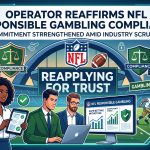

Licensed gaming operators across the United States are pushing a single argument harder than ever before: that regulation is not a burden but their core competitive advantage. The claim comes as legal operators face mounting pressure from offshore sites, sweepstakes platforms and, most recently, prediction markets that sit outside the gaming rulebook. For an industry that spends heavily to stay inside the lines, the question is whether consumers and regulators will reward that discipline.
And the stakes are not abstract. Every dollar spent on background checks, responsible gaming tools and audit trails is a dollar an unlicensed rival never has to pay.
What Compliance Actually Buys the Regulated Market
Before the detail, the shape of the argument: licensed operators are reframing cost as credibility. The regulated sector wants to convert its spending into a trust signal that offshore and gray-market competitors cannot replicate.
- Regulation is being marketed as a product feature. Operators are positioning consumer protection, not just odds or bonuses, as the reason to play on licensed platforms.
- The competitive threat has broadened from offshore casinos to sweepstakes models and prediction markets, each operating under a different legal theory.
- Cost asymmetry is widening. Investigations, responsible gaming mandates and audit requirements raise the price of doing business legally while unlicensed rivals carry none of it.
- The argument only works if regulators act. Without enforcement against unauthorised competitors, compliance becomes a handicap rather than a moat.
- Consumer behaviour remains the open variable.
The Threats Lining Up Against Licensed Operators
The regulated industry has fought offshore gaming for years. That fight is familiar. What has changed is the arrival of competitors who do not present themselves as gaming companies at all.
Sweepstakes platforms lean on promotional-law carve-outs to offer casino-style play without a gaming licence. Prediction markets, meanwhile, frame wagering on outcomes as financial contracts, a distinction that shifts them toward federal commodities oversight rather than state gaming regulators. Both models reach consumers who look, from the outside, identical to licensed bettors. But the obligations behind each product could not be further apart.
That gap is the heart of the dispute. A licensed sportsbook must verify identity, enforce geolocation, fund problem-gambling programs and submit to state audits. A competitor operating under a different legal label may do little of this, at least on paper, while competing for the same customer. Groups such as the national trade body representing commercial casino operators have long argued that this imbalance distorts the market.
A Market Caught Between Two Frameworks
The result is a competitive field where the same activity carries wildly different rules depending on what it is called. Consider the contrast:
| Model | Regulatory Basis | Typical Obligations |
|---|---|---|
| Licensed operator | State gaming licence | Background investigations, responsible gaming funding, geolocation, state audits and ongoing reporting |
| Sweepstakes platform | Promotional / sweepstakes law | Minimal gaming-specific oversight |
| Prediction market | Commodities / contract framework | Federal-facing rules, limited state consumer protections |
Three products, one customer, incompatible rulebooks. That is the market as it stands.
Why the Timing Matters
Prediction markets have moved from the regulatory margins to mainstream attention, drawing scrutiny from both federal and state authorities. Their growth forces a harder question onto regulators: if an outcome-based contract functions like a bet, which agency owns it? The answer determines whether licensed operators face a walled-off competitor or an open flank.
For the regulated sector, the urgency is commercial. Each quarter that unlicensed or differently-licensed rivals capture customers is a quarter of eroded market share, and the compliance cost base does not shrink to match. Operators have signalled they will press regulators to apply consistent treatment, arguing that identical risk should carry identical obligations.
Not everyone sees it that way. Prediction-market advocates contend their products are fundamentally financial instruments, and that treating them as gaming would misread both the law and the product. Which raises a harder question: who decides where a bet ends and a contract begins?
The Business Case Beneath the Argument
Strip away the policy language and the industry’s position is straightforward economics. Compliance is a sunk cost. The only way to recover it is to make it count for something, either through consumer loyalty or through enforcement that levels the field.
Licensed operators are effectively asking two audiences for the same thing. From regulators, they want enforcement against unauthorised competitors. From consumers, they want a premium on trust, a willingness to choose the protected platform even when an unregulated alternative offers looser terms or larger promotions.
The trouble is that trust rarely wins on price. In practice, consumers chasing the best promotion may not pause to ask who holds the licence. That behavioural reality, more than any legal theory, may determine whether regulation-as-advantage holds up.
Frequently Asked Questions
Why do licensed operators say regulation gives them an edge?
Because the obligations they meet, from background checks to responsible gaming funding, are designed to protect consumers in ways unlicensed rivals do not match. Operators argue this builds trust that competitors cannot easily copy.
How are prediction markets different from sportsbooks?
Prediction markets frame wagers as financial contracts tied to outcomes, which pushes them toward commodities-style oversight rather than state gaming regulation. The practical effect is a different, often lighter, set of consumer-protection obligations.
What are sweepstakes gaming platforms?
They offer casino-style play using promotional and sweepstakes law rather than a gaming licence, which lets them operate without the full weight of state gaming rules.
Does the regulated industry’s argument actually work?
That depends on two things it does not fully control: whether regulators enforce consistently against unlicensed competitors, and whether consumers are willing to value protection over price.
What Happens Next
Regulators now hold the decisive variable. The precedent set around prediction markets gives state and federal authorities a template for how to treat outcome-based wagering, and licensed operators are already lobbying for parity. The industry has made its case that compliance is worth paying for.
Whether anyone else agrees is the part still unwritten.


