




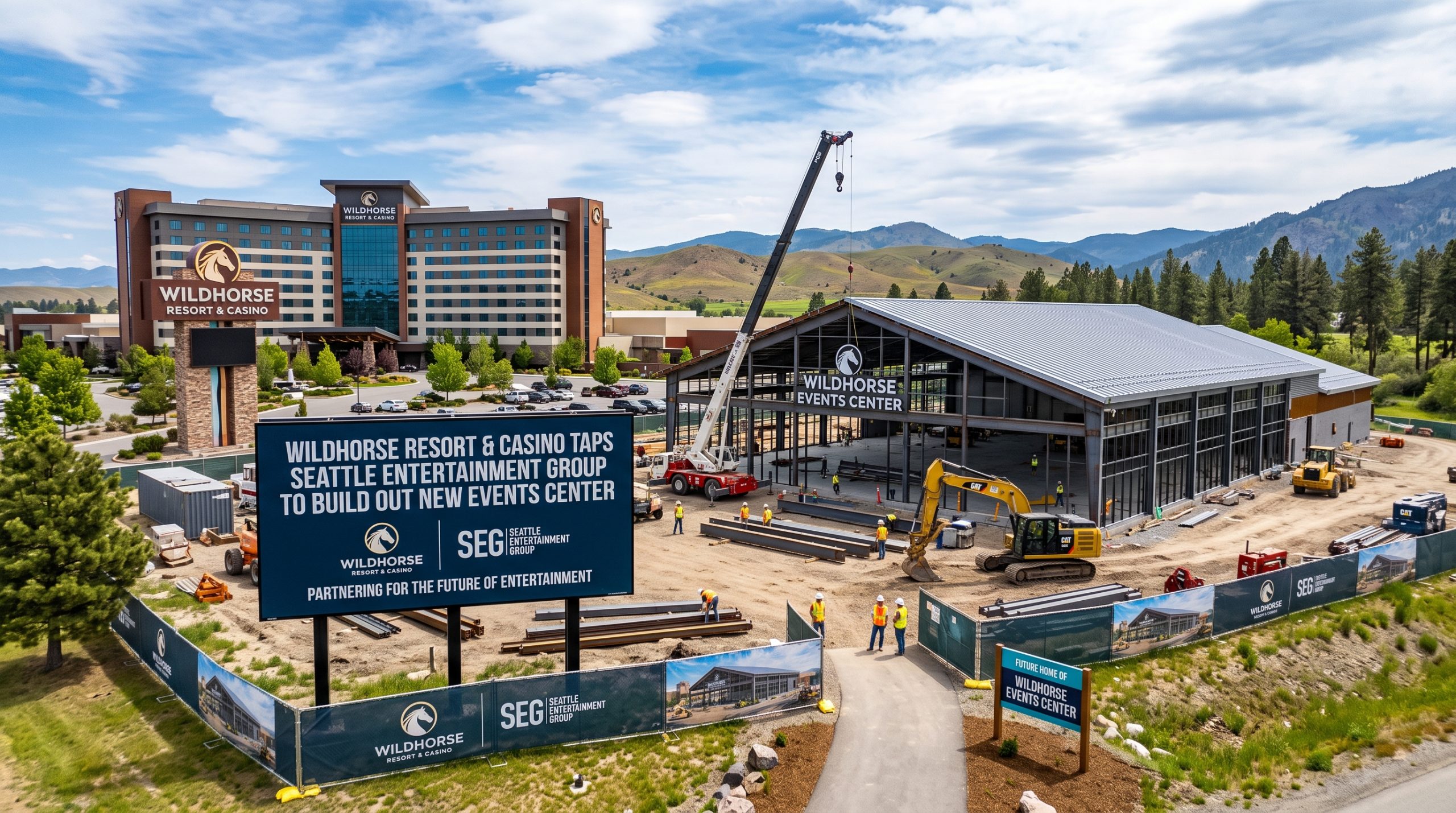
Wildhorse Resort & Casino, owned and operated by the Confederated Tribes of the Umatilla Indian Reservation in Pendleton, Oregon, has selected Seattle Entertainment Group to lead the entertainment strategy for its upcoming expansion. The announcement, made Thursday, hands the Native-owned production and talent-buying firm responsibility for national headliner programming and operational planning tied to a new events center scheduled to open in spring. For a regional property in eastern Oregon, the move signals a clear bet: that live entertainment, not just gaming floors, will carry the next phase of growth.
And the choice of partner carries its own weight. Seattle Entertainment Group is a 100% Native-owned entertainment, production, and talent-buying company, a detail that aligns the engagement with the tribal ownership behind Wildhorse itself.
What the Seattle Entertainment Group Deal Means for Wildhorse
Before the specifics, the short version for operators watching this space: a mid-market tribal property is professionalising its entertainment pipeline ahead of a physical expansion, and it is doing so through a Native-owned specialist rather than a generic promoter.
- Headliner access: The partnership is built around securing national touring acts, which raises Wildhorse’s competitive profile against larger Pacific Northwest casino venues.
- Operational planning for the new events center is folded into the same mandate, meaning programming and venue readiness are being coordinated rather than siloed.
- Cultural alignment: Selecting a 100% Native-owned firm keeps revenue and decision-making within the Native-owned business ecosystem, a point the tribe has chosen to emphasise.
- The spring opening sets a firm commercial deadline, which gives both parties a measurable milestone rather than an open-ended engagement.
A Property Betting on Live Events
Wildhorse already functions as more than a gaming hall. The destination combines a casino, hotel rooms, dining, golf, and a cultural institute, and the new events center extends that mix toward large-format live entertainment. That matters because regional resorts increasingly compete on experience, not odds. A guest who drives in for a concert books a room, buys dinner, and often returns to the floor. The events center is the hook; everything else is the margin.
The decision to bring in outside expertise says something about ambition. Booking a national headliner is not the same skill set as running a casino, and Wildhorse has opted to buy that capability rather than build it internally (a pragmatic call for a property of this scale). What remains less clear is the capacity and seating configuration of the new venue, which the resort has not yet detailed publicly.
Why Native-Owned Partnership Is a Strategic Signal
The ownership structure of the chosen partner is not incidental. Wildhorse is operated by the Confederated Tribes of the Umatilla Indian Reservation, and pairing with a fully Native-owned entertainment company keeps economic activity circulating within tribal enterprise networks. In practice, this reflects a broader pattern across Indian gaming, where tribes have moved to control more of the value chain: hospitality, dining, and now talent buying and live production.
That shift matters because it changes where the money lands. When a property outsources entertainment to a mainstream promoter, booking fees and production margins typically leave the community. Routing that spend through a Native-owned firm redirects it. Whether the arrangement delivers comparable headliner access at competitive cost is the test that spring will answer.
The Competitive Backdrop in the Pacific Northwest
Tribal gaming across Oregon and Washington has leaned hard into entertainment as a differentiator. Larger venues in the region routinely book arena-grade acts, and smaller properties risk being squeezed if they cannot offer a reason to visit beyond the gaming floor. An events center with credible national programming is Wildhorse’s answer to that pressure.
Interested parties can review the resort’s existing operations through the official Wildhorse Resort & Casino destination site, which outlines its current hotel, dining, and gaming footprint.
| Element | Detail |
|---|---|
| Property owner | Confederated Tribes of the Umatilla Indian Reservation, Pendleton, Oregon |
| Entertainment partner | Seattle Entertainment Group, a 100% Native-owned production and talent-buying firm |
| Scope of engagement | National headliner programming and operational planning for the new events center |
| Target opening | Spring, aligned with the resort’s broader expansion timeline |
Reading the Business Impact
For executives tracking the regional hospitality market, the signal is less about one booking contract and more about positioning. Wildhorse is converting a construction project into a revenue engine before the doors open, lining up programming so the venue launches with momentum rather than an empty calendar. The economic logic is straightforward: live events drive ancillary spend across rooms, food and beverage, and gaming.
Still, execution risk sits in the timeline. Securing national acts requires lead time, and a spring opening leaves a finite window to lock routing and confirm dates. The decision to engage a specialist now, rather than closer to launch, suggests the resort understands that constraint.
Frequently Asked Questions
Who owns Wildhorse Resort & Casino?
The resort is owned and operated by the Confederated Tribes of the Umatilla Indian Reservation, based in Pendleton, Oregon.
What exactly will Seattle Entertainment Group do?
The firm has been selected to lead Wildhorse’s entertainment strategy, including booking national headliner acts and handling operational planning for the new events center. It is a 100% Native-owned entertainment, production, and talent-buying company.
When does the new events center open?
Spring. It forms part of the resort’s larger expansion.
Why does a Native-owned partner matter here?
Pairing a tribally operated resort with a fully Native-owned entertainment company keeps production and booking revenue within Native enterprise networks, reinforcing economic self-determination alongside the commercial goals of the expansion.
What to Watch Next
The first announced headliners will reveal how ambitious this program really is. Booking depth, venue capacity, and ticket pricing will each tell operators how seriously Wildhorse intends to compete with the region’s larger entertainment destinations once the spring opening arrives.


