



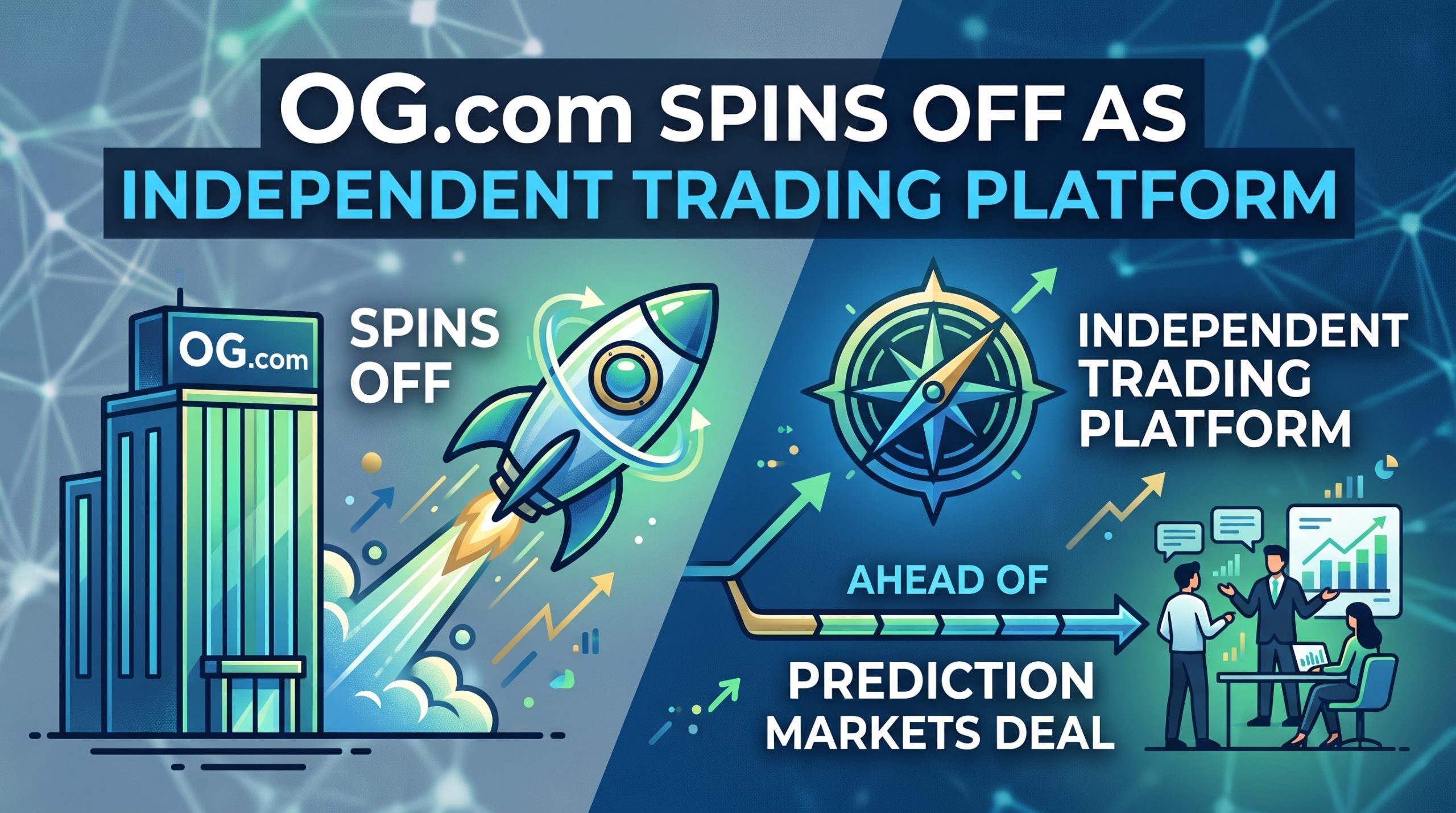
OG.com has been carved out as a standalone trading platform, a move that clears the path for a prediction markets deal now taking shape. The spin-off separates the brand from its former parent structure and hands it operational independence at a moment when regulated event-contract trading is drawing fresh institutional attention. For operators watching the sector, the timing is not accidental.
What the transaction means in practice is a repositioning: OG.com now runs as its own trading entity, free to strike partnerships that a tethered subsidiary might have struggled to pursue.
Why the OG.com Spin-Off Matters for Market Operators
Before the specifics, the strategic reading. The decision to establish OG.com independently and then pair it with a prediction markets arrangement points to a deliberate sequencing rather than two unrelated events. Here is how the business impact breaks down.
- Structural independence: Operating as a separate platform gives OG.com the authority to negotiate and integrate prediction market products without parent-level approval bottlenecks.
- Deal readiness: The spin-off arguably de-risks the incoming prediction markets deal by clarifying who owns what, and who signs.
- Prediction markets remain one of the fastest-moving corners of online trading, and a clean corporate shell is easier to plug in.
- Positioning signal: The sequence tells rivals that OG.com intends to compete in event-contract trading as a primary line, not a bolt-on feature.
- Regulatory clarity: A defined entity simplifies licensing conversations, at least on paper, where regulators want a single accountable operator.
A Platform Cut Loose, Then Pointed at Prediction Markets
The spin-off makes OG.com an independent trading platform, and the prediction markets deal follows directly from that change in status. That ordering matters because it suggests the two steps were planned together. A subsidiary does not usually gain the latitude to enter a fast-growing vertical overnight; an independent operator does.
Prediction markets let users trade contracts tied to the outcome of real-world events, from elections to economic indicators. The category has moved from the fringe toward something closer to the mainstream of regulated trading, drawing operators who once treated it as a novelty. And while the appeal is obvious, so is the friction: pricing, settlement, and oversight all demand more discipline than a conventional order book.
For OG.com, the calculation is straightforward. Enter the space with a purpose-built structure rather than retrofit an existing one.
How the Structure Compares
The shift from subsidiary to independent platform changes several operating realities. The table below sets out the practical differences.
| Dimension | Before Spin-Off | After Spin-Off |
|---|---|---|
| Corporate status | Dependent unit | Independent trading platform |
| Deal authority | Parent approval required | Direct negotiation, including the incoming prediction markets deal now moving forward under its own name |
| Product focus | Shared roadmap | Prediction markets as a core line |
| Accountability | Blended | Single, defined operator |
Where Prediction Markets Fit in the Wider Trading Landscape
Event-contract trading sits at an awkward intersection of financial markets, wagering, and information aggregation. Regulators in several jurisdictions have treated the category cautiously, wary of contracts that resemble bets while behaving like derivatives (a distinction supervisors have been slow to settle). That ambiguity is exactly why corporate structure carries weight here.
An operator entering the space wants clean lines of ownership and a clear compliance perimeter. The OG.com spin-off delivers both, at least in theory. Whether the incoming deal secures the licensing footprint needed to scale is the harder question, and one no announcement can answer by itself.
Still, the appetite is real. Prediction markets reward platforms that can settle contracts transparently and price probability well, and the operators building for that now are positioning ahead of broader regulatory clarity. Those who move early tend to shape the rules that follow.
What This Signals for Competitors
Rivals reading the OG.com move will notice the intent behind it. Spinning off a platform and immediately steering it toward prediction markets is not a passive play. It reads as a bid to own a slice of the vertical before the field crowds further.
The competitive response will likely hinge on how quickly others can match the structural agility that independence provides. Firms with the trading infrastructure and appetite to follow the model set by the newly independent OG.com trading platform may find the barrier to entry lower than expected. But execution in prediction markets is unforgiving, and a clean corporate shell only gets an operator to the starting line.
Frequently Asked Questions
What does the OG.com spin-off actually change?
It makes OG.com an independent trading platform rather than a dependent unit, giving it the authority to strike deals and launch products on its own terms. The prediction markets deal is the first visible consequence of that new status.
What are prediction markets?
They are venues where users trade contracts tied to the outcome of real-world events, with prices reflecting the market’s collective estimate of probability. Think of a contract that pays out if a specific outcome occurs.
Why sequence the spin-off before the deal?
Because an independent entity can negotiate and integrate faster, and because it gives regulators a single accountable operator to assess. Sequencing it this way removes a layer of friction that a subsidiary would have faced.
Is prediction market trading regulated?
Treatment varies by jurisdiction, and supervisors have not reached a uniform view on whether such contracts are wagers or derivatives. That unsettled status is one reason corporate structure matters so much in this vertical.
What happens next for OG.com?
The prediction markets deal is set to define its early direction as a standalone platform. How far it scales will depend on the licensing and settlement foundations it builds behind the announcement.