

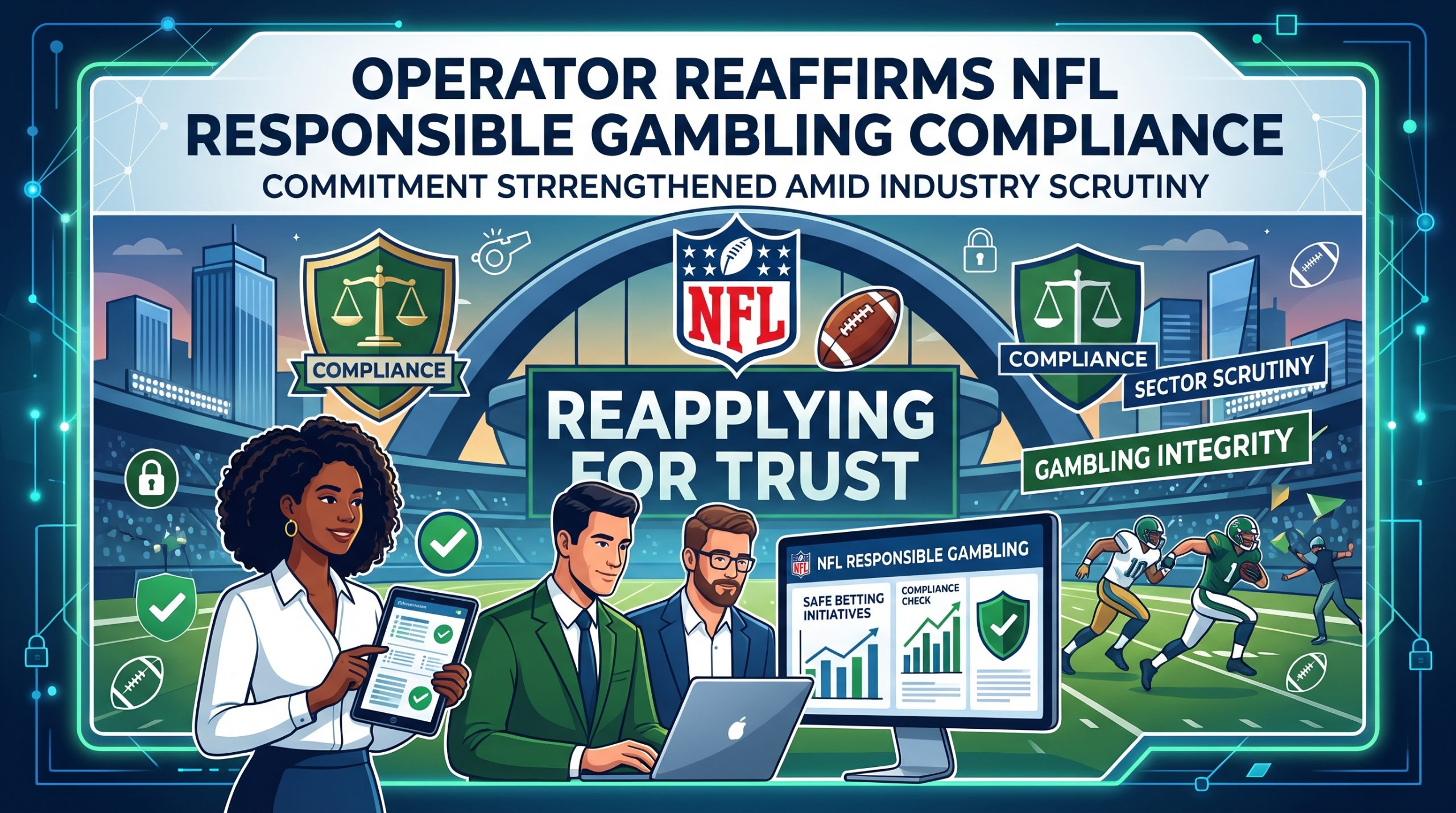
A sportsbook operator has stated that it strictly adheres to the NFL’s responsible gambling initiatives, a declaration that arrives as regulators, leagues, and consumer advocates intensify their focus on betting conduct across the United States. The statement reinforces the operator’s alignment with league-backed consumer protection standards during one of the most heavily wagered periods of the American sporting calendar. For an industry still defining its own guardrails, public commitments like this one carry weight beyond marketing.
But declarations are easy. Enforcement is where the gap tends to open.
What the Compliance Pledge Signals for the Betting Market
The NFL’s responsible gambling framework sits at the center of how licensed operators present themselves to both regulators and the public. When an operator commits to those initiatives, it is signalling two things at once: adherence to league expectations and a bid to stay clear of the enforcement actions that have cost rivals in multiple states. Below is a breakdown of why the statement matters to stakeholders watching the sector.
- Regulatory positioning: Public alignment with NFL standards strengthens an operator’s standing with state gaming commissions, which increasingly treat responsible gambling programs as a licensing condition rather than a courtesy.
- Brand trust: Visible compliance reduces reputational exposure during high-traffic betting windows, when complaint volumes historically spike.
- Partnership integrity matters here, too. League affiliations hinge on operators honoring the conduct terms attached to them.
- Competitive differentiation: In a crowded field, demonstrable responsible gambling practices can distinguish operators to regulators weighing market access, though not every participant treats this as a priority.
A League That Now Shapes Betting Behaviour
The NFL’s relationship with legal wagering has shifted dramatically since the 2018 Supreme Court decision in Murphy v. NCAA struck down the federal ban on sports betting. What was once treated as a threat to competitive integrity has become a regulated revenue channel, complete with official betting partners and in-stadium sportsbook presence. The league’s responsible gambling initiatives are built to manage that exposure: age verification protocols, self-exclusion mechanisms, advertising limits, and problem-gambling messaging embedded across broadcasts.
These tools exist on paper. In practice, their effectiveness depends on whether operators apply them consistently across every state in which they hold a license, and that consistency is harder to audit than most public statements suggest. An operator pledging strict adherence is, in effect, inviting that audit.
Which raises a harder question: who verifies the pledge?
Regulatory Pressure Is Building Across States
State regulators have grown more assertive. Over the past two years, gaming commissions in several jurisdictions have issued fines, demanded remediation, and in some cases suspended operations over responsible gambling failures. The direction of travel is clear.
| Compliance Area | Regulatory Expectation | Operator Exposure |
|---|---|---|
| Self-exclusion | Functional, cross-platform enrollment that blocks registered users from reopening accounts under variations of their name | Fines, license review |
| Advertising standards | No targeting of minors or self-excluded individuals | Penalties, mandated ad pulls |
| Deposit limits | Accessible, enforceable tools | Consumer complaints |
| Problem-gambling messaging | Visible and consistent | Reputational damage |
The operator’s affirmation of NFL-aligned practices reads partly as a defensive measure. Operators that can document adherence are better placed to withstand regulatory review, and those that cannot have already learned the cost. Details of the operator’s specific responsible gambling spending or enrollment figures were not disclosed in the statement.
Why the Timing Carries Weight
Football season concentrates betting volume like no other period in the US sporting year. Single-game handle during marquee matchups runs into the hundreds of millions of dollars across regulated markets, and with that volume comes a corresponding rise in at-risk behaviour. An operator restating its responsible gambling commitment during this window is addressing the moment when scrutiny peaks.
Advocacy groups have argued that advertising saturation during games normalises wagering for vulnerable audiences. Operators counter that league-backed frameworks and visible safer-gambling tools mitigate that risk. Both positions hold some truth, which is precisely why the debate has proven difficult to settle. Companies that want to stay on the right side of it are increasingly turning to the NFL’s official responsible gambling resources to anchor their public commitments.
The Business Case Behind Responsible Gambling
There is a commercial logic here that extends past compliance. Operators that build durable trust with regulators secure smoother market-access approvals, and in a sector where expansion into new states is the primary growth lever, that access is the whole game. A single enforcement action can delay or derail entry into a lucrative jurisdiction. Weighed against that, investment in responsible gambling infrastructure looks less like a cost and more like insurance.
Still, skeptics note that statements of adherence are not the same as independently verified outcomes. The distinction between policy and practice remains the fault line regulators are watching most closely.
Frequently Asked Questions
What are the NFL’s responsible gambling initiatives?
They are a set of consumer-protection measures tied to the league’s betting partnerships, covering age verification, self-exclusion options, advertising restrictions, and problem-gambling awareness messaging delivered across broadcasts and digital platforms.
Does adhering to NFL standards satisfy state regulators?
Not entirely. League frameworks complement state law but do not replace it. Each jurisdiction sets its own licensing conditions, and operators must meet those independently of any league alignment.
Why does the announcement matter now?
Because football season drives peak betting volume, and with it peak regulatory and public attention on how operators handle at-risk customers.
What happens if an operator fails to comply?
Consequences range from fines to license suspension, depending on the state and the severity of the breach.
What to Watch Next
The operator has set a public benchmark. The measure of it will be whether enrollment data, complaint rates, and regulatory findings over the coming season match the language of the pledge. Regulators now have a template they have already signalled interest in using, and the operators making the loudest commitments are the ones who will be held to them first.