





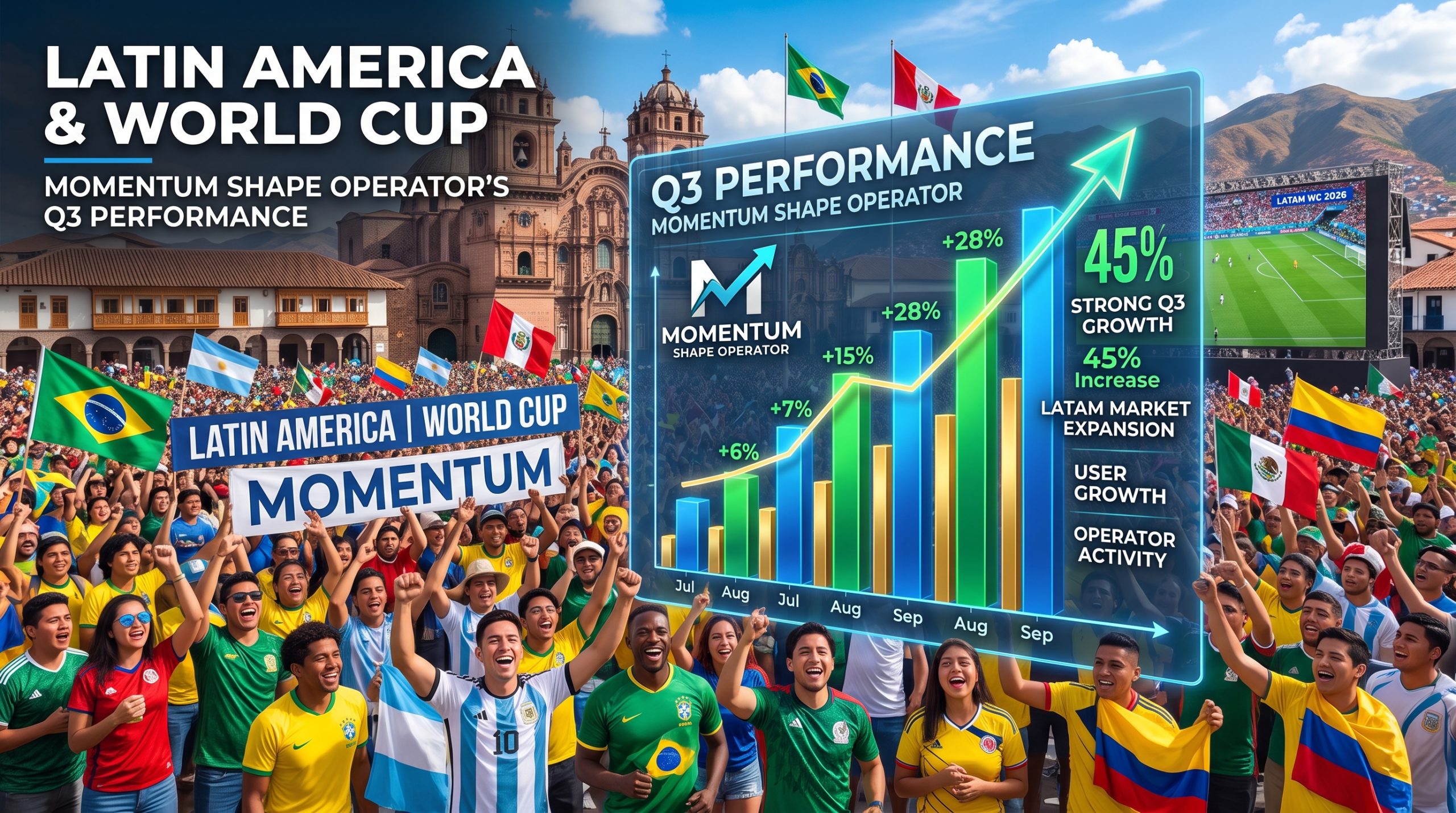
An international gaming operator has pointed to Latin America and the run-up to the FIFA World Cup as two of the main forces behind its third-quarter results. The company flagged both in its latest Q3 report, framing them as the drivers of regional growth and heightened betting activity. For executives tracking where expansion money is flowing, the message is fairly direct: the action has moved south, and major sporting cycles still move the needle.
What the Q3 Report Signals for Operators
Before the takeaways, a bit of context. The quarter’s narrative rests on two pillars that rarely appear together with this much weight. One is geographic. The other is calendar-driven, tied to a tournament that reliably pulls casual bettors into regulated and unregulated markets alike.
- Latin America is doing heavy lifting. The operator attributes a meaningful share of its momentum to continued traction across the region, where sports betting demand has been climbing.
- World Cup anticipation is already converting into engagement, well ahead of the tournament itself.
- Diversification pays off: leaning on a geographic growth story and an event-driven one at the same time cushions exposure to any single market cooling off.
- For competitors, the report doubles as a map of where capital and marketing budgets are likely headed next.
Why Latin America Keeps Pulling Focus
The region has become arguably the most watched growth frontier in online gaming. Brazil’s regulated market opening, Colombia’s established licensing regime, and shifting rules across Argentina’s provinces have created a patchwork that operators are learning to navigate country by country. It is not a single market. It is a dozen regulatory conversations happening at once.
And while the opportunity is real, so is the friction. Tax structures vary, payment rails differ, and local licensing requirements can shift with little warning. Operators that treat the region as one block tend to stumble. Those that localise (payment methods, language, football sponsorships that resonate locally) tend to hold their users longer.
The company’s decision to name Latin America explicitly in its reporting suggests the contribution is material enough to warrant investor attention, not a footnote.
The World Cup Effect: Bigger Than a Single Tournament
Major football tournaments function as acquisition engines. Casual bettors who ignore domestic leagues often place their first wager during a World Cup, and a share of them stay afterward. That conversion dynamic is why operators front-load marketing and product readiness months before kickoff.
The pull of the event shows up in handle, registrations, and reactivated accounts. What remains less clear is retention: how many of those tournament-driven sign-ups still exist as active users a year later. In practice, the honest answer varies widely by operator and by how aggressively welcome offers were deployed.
| Growth Driver | Nature | Business Implication |
|---|---|---|
| Latin America expansion | Structural, region-wide | Sustained revenue base if localisation and licensing are handled market by market, not as a single bloc |
| World Cup momentum | Event-driven, cyclical | Short-term spike in acquisition and handle, with retention the open question |
Reading the Strategic Picture
Pairing a structural growth story with a cyclical one is a deliberate hedge. Latin America offers a longer runway; the World Cup offers an immediate catalyst. Together they smooth the kind of quarter-to-quarter volatility that makes gaming investors nervous.
But the two carry different risks. Regional expansion lives or dies on regulatory stability, which in several Latin American jurisdictions is still being written in real time. Event-driven growth fades the moment the final whistle blows unless retention mechanics are in place. The operators that win the next cycle will be the ones that convert World Cup traffic into Latin American loyalty, turning a spike into a base. Companies watching this space can follow the broader market through resources covering the latest regulated online gaming developments as licensing frameworks mature.
Not everyone will manage that transition cleanly.
What Comes Next for Regional Betting Markets
The near-term calendar favours operators positioned in both themes. World Cup-related activity tends to build steadily rather than arrive all at once, giving well-prepared brands a window to capture and hold new users. In Latin America, the direction of travel points toward more regulation, not less, which generally rewards established, compliant operators over opportunistic entrants.
The precedent matters. As more jurisdictions formalise licensing, the operators already reporting regional strength gain a credibility advantage with regulators and partners. That head start compounds.
Frequently Asked Questions
Why is Latin America so central to gaming growth right now?
The region combines a large, football-obsessed population with markets that are only recently formalising their betting regulations. Brazil’s regulated framework and established regimes in countries like Colombia have opened doors that were effectively shut a few years ago, and operators are moving quickly to establish presence before competition intensifies.
How much does a World Cup actually move betting activity?
Significantly, though the effect is concentrated and temporary. Tournaments drive sharp increases in registrations and handle, but the lasting value depends entirely on how many new users an operator retains once the event ends.
Is event-driven growth reliable for long-term planning?
On its own, no. It is a catalyst, not a foundation, which is why the operator is pairing it with structural regional expansion.
What should competitors take from this report?
Chiefly, where the money is going. Naming Latin America and the World Cup as headline drivers tells rivals which markets and moments are producing returns, and that kind of disclosure rarely goes unnoticed in a competitive sector.


